
Your Product Already Has a Story. The Question Is Whether You Know It.
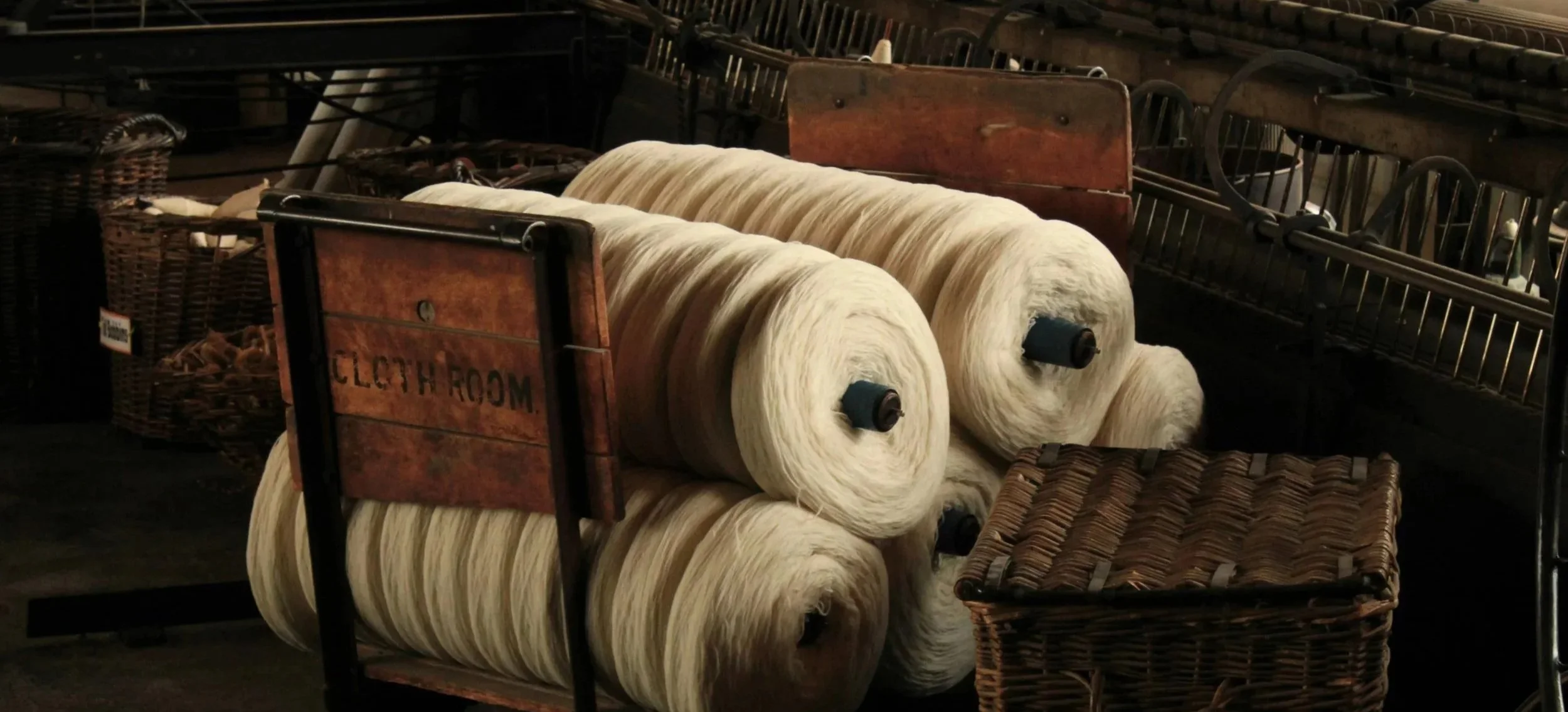
Every garment that leaves a factory carries more information than the label sewn into its collar. It carries the origin of its fibres, the names of the mills that processed them, the chemicals used in dyeing, the countries through which it passed, the workers whose hands assembled it, the carbon generated in its making. That information exists. It was created at every stage of production. The question is not whether the story is there. The question is whether anyone in the organisation that sells the product can tell it.
For most fashion and textiles companies, the honest answer is no — or at best, not reliably, not completely, and not quickly enough to matter.
This is not primarily a technology problem, though technology will be part of the solution. It is not primarily a sustainability problem, though sustainability teams are often the ones left holding it. It is an organisational problem: the information that constitutes a product's story is scattered across functions, systems, supplier relationships, and geographies — gathered reactively when needed for a specific purpose, then left to degrade or disappear.
The case for changing this rarely gets made clearly, because the people who understand the data problem most acutely — operations teams, IT departments, sustainability leads — tend not to speak the language of strategic advantage. And the people who speak that language — executives, finance directors, board members — rarely see data infrastructure as anything other than a cost to be managed.
So the conversation stays stuck. Sustainability files the compliance report. IT maintains the systems. Operations manages the supply chain. And the product's story — the one that will increasingly determine market access, investor confidence, consumer trust, and regulatory standing — remains something that nobody in the organisation owns end to end.
That is the gap this series of articles is written to address.
What has changed — and changed significantly in the past two years — is that the cost of not knowing your product's story is no longer abstract. The European Union's Ecodesign for Sustainable Products Regulation is moving from framework to enforcement. The Digital Product Passport, which requires brands to make verified product data available across the supply chain and to end consumers, is not a future possibility for the textiles sector. It is a scheduled requirement, with implementation timelines now visible enough to plan against.
But the regulatory deadline, while real, is the least interesting part of this story.
The more interesting question is what happens to organisations that build genuine data capability — not to satisfy a regulator, but because they have decided to actually know their products. What becomes possible when a brand can answer, for any item in its range: what is it made of, where did those materials come from, what processes did they go through, what is its environmental footprint, what should happen to it at the end of its useful life?
The answer is not just compliance. It is better sourcing decisions, because the data exists to make them. It is more credible sustainability claims, because the evidence exists to support them. It is faster response to supply chain disruption, because the visibility exists to identify it. It is new business models — resale, repair, rental — that depend on knowing a product's history as a precondition for managing its future.
None of that is available to organisations that treat data as a byproduct of transactions rather than an asset to be managed.
There is a pattern visible in the organisations that are furthest ahead on this. They did not begin by asking how to comply with the DPP. They began by asking a different question: what would it mean to genuinely know our products? That question led them to look at data differently — not as something generated incidentally in the course of doing business, but as something worth capturing intentionally, maintaining consistently, and making available across the organisation and supply chain.
The compliance piece followed from that orientation. It did not precede it.
Organisations that begin from the compliance question — what do we need to produce for the regulator, and when? — tend to build point solutions for specific requirements, then find themselves rebuilding when the requirements shift or expand. And they will shift. The DPP timeline for textiles runs through 2033, with requirements deepening at each phase. An organisation optimised for the 2027 minimum will face that process again in 2030, and again in 2033.
The organisations that will navigate that trajectory with least friction are those that built the underlying capability rather than chasing the successive deadlines.
The people who need to engage with this are not hard to find. They are the ones who have felt the gap between what their organisation claims to know about its products and what it can actually demonstrate. That gap shows up differently depending on where you sit — in the questions you can't answer, the reports you can't verify, the decisions you're making with less information than the situation deserves.
Different functions, different stakes. But the same underlying condition: an organisation that does not systematically manage data about its products is an organisation that does not fully know what it makes, where it comes from, or where it goes.
That is the story this series tells. The first question is whether your organisation is ready to hear it.
Michael Shea is a digital excellence advisor, non-executive director, and leadership coach working with organisations navigating the human and technical dimensions of digital transformation. He hosts The Aeolian Discourse and writes at The Aeolian.