
Operations Holds the Evidence
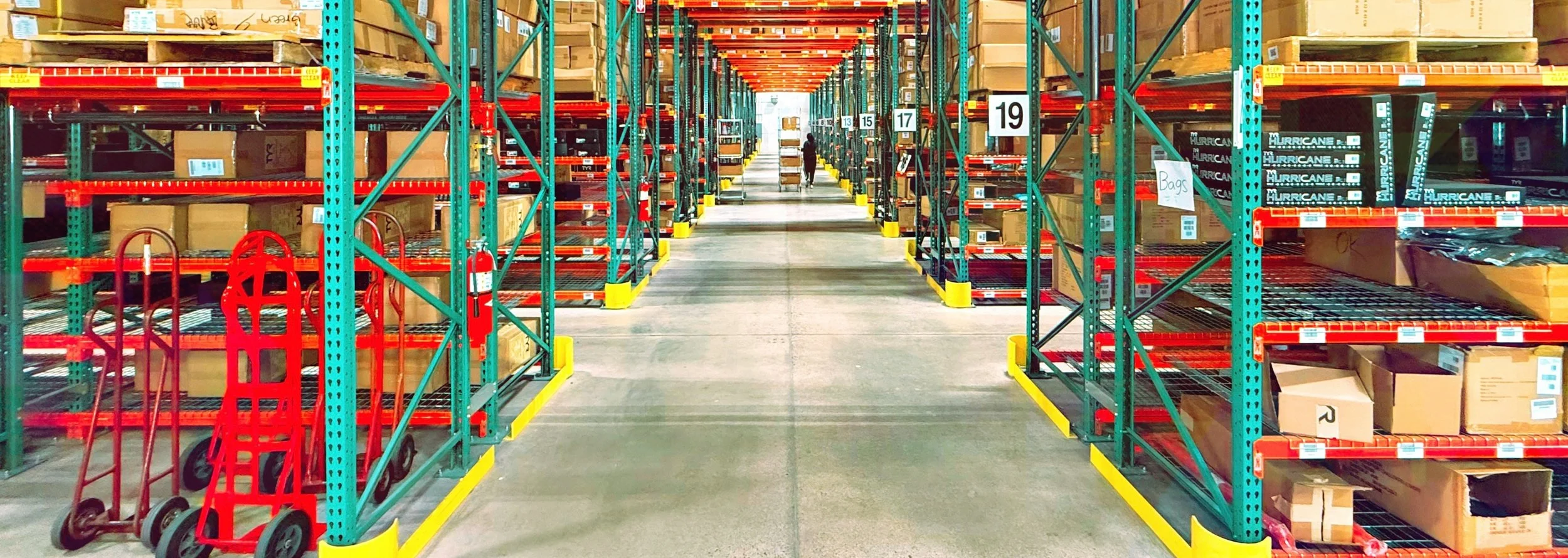
When a garment moves from a production facility to a distribution centre, an event occurs. When it is received, inspected, and logged, more events occur. When it is shipped to a retail partner, returned by a consumer, and routed to clearance or disposal, each carries data the passport will eventually need. Taken together, that sequence of events is the evidentiary backbone of any credible Digital Product Passport.
Most of that evidence is never captured in a form that serves any purpose beyond the immediate operational one.
Operations teams are not indifferent to data. They run on it — production schedules, shipment tracking, returns processing. The data exists, in operational systems, in quantities that would surprise most of the organisation. What is rarely present is the connection between that operational data and the product-level record that a DPP requires. A shipment is logged. A return is processed. A disposal route is actioned. Each of those events generates data that tells a story about a specific product — and that story is almost never assembled, because the operational system was built to manage the event, not to maintain a product history.
This is a structural gap, not a data gap. The information is there. The architecture that would connect it to a product-level record, maintained across the product's lifecycle rather than within a single operational transaction, has not been built. And it has not been built because nobody asked Operations to build it — the data conversation, when it happens at all, tends to start with the systems that Sustainability or IT manage, and work backward to Operations as an afterthought.
The DPP changes that logic. A credible passport requires verified, product-specific information about what happened to a product across its lifecycle — not a summary, not a category average, but a traceable record of specific events linked to a specific item. Production steps. Shipment origins. End-of-life handling. That information lives in Operations. It lives nowhere else with the same granularity or the same reliability.
The functions that need it most are frequently the furthest from the conversations where it is generated. Sustainability needs end-of-life data to substantiate environmental claims. Legal needs lifecycle event records to defend those claims if challenged. Both have been assembling approximations — estimated figures, category-level averages — because the operational event data that would replace approximation with evidence has not been connected to their needs.
The shift required is not primarily technological. Most operational systems already capture the events — they just don't capture them in a way designed to serve anything beyond the immediate transaction. Connecting that data to a product-level record and making it available across the organisation throughout the product's lifecycle is a governance and architecture decision before it is a technology one. It requires someone to ask what operational data is worth keeping beyond its immediate use, and who is responsible for making it available.
Operations is rarely asked that question. It is asked to manage events efficiently, to hit throughput targets. Data capture that serves a purpose beyond the operational transaction adds friction — marginal, in most cases, but real. The organisations beginning to close this gap are the ones that have made an explicit decision that the operational record of a product's lifecycle is worth the friction required to maintain it.
The competitive logic here is less immediately visible than in Finance or Legal, but it compounds in a direction that matters. An organisation that has built systematic operational event capture knows, in verifiable detail, what happens to its products across their entire lifecycle. That knowledge is not only a compliance asset — it is the operational foundation of circular business models. Resale, repair, and take-back programmes all depend on knowing a product's history before making a decision about its future. The organisations building that knowledge now, as a byproduct of operational data discipline rather than as a separate circular economy initiative, will find those models accessible in ways that competitors starting from approximations will not.
Operations holds the evidence. Whether it is assembled, maintained, and made available as an organisational asset — or left to degrade within the systems that generated it — is a decision that most organisations have not yet consciously made. The DPP is making it unavoidable.
Michael Shea is a digital excellence advisor, non-executive director, and leadership coach working with organisations navigating the human and technical dimensions of digital transformation. He hosts The Aeolian Discourse and writes at The Aeolian.
Photo by Russ Murray on Unsplash